
Wanting to plan your own bikepacking trip and not sure where to start? Well don’t stress: I also had to start somewhere and figure things out too!
I didn’t start my cycling journey with bikepacking in mind – I started cycling on quiet back roads that happened to often involve gravel. When I started to do this more I acquired my first gravel bike and then after a bit more time the idea of going for multi-day trips really took hold. There are so many ways to enjoy travelling by bike. My best advice is be prepared to experiment, and just have a go.
The first thing to think about is what sort of travelling you want to do. And the easiest type is CyclingGravel’s first preference, namely “flash bikepacking” or “credit card bikepacking” (staying in pubs, cabins, airbnbs, motels and hotels). This has the significant advantage of reducing the amount of things you need to carry, but also simplifies what you need to plan for. I can really relate to the pros and cons of credit card bikepacking shared by MatthewNorway. But it has a downside: many places you might want to go are brilliant places to camp, and in fact may only be possible to travel to by bike if you are prepared to do so. I now still mostly go flash, but increasingly go on camping trips too.
And on that, not having to take all camping equipment, including food and cooking essentials, makes it easy to plan on using a “fastpacking” bikepack setup (rather than a bike touring arrangement with panniers etc – this is a term I first saw used by Stefan Amato of pannier.cc fame). You can make this type of setup work with camping equipment, but it is not as easy. Having said that, I do cycling trips with panniers too (and I find this necessary when camping) – it depends on how many days I’m planning on travelling in what conditions, the distance I want to travel each day, and therefore the speed at which I’m hoping to go. In short, start however you like and figure things out.
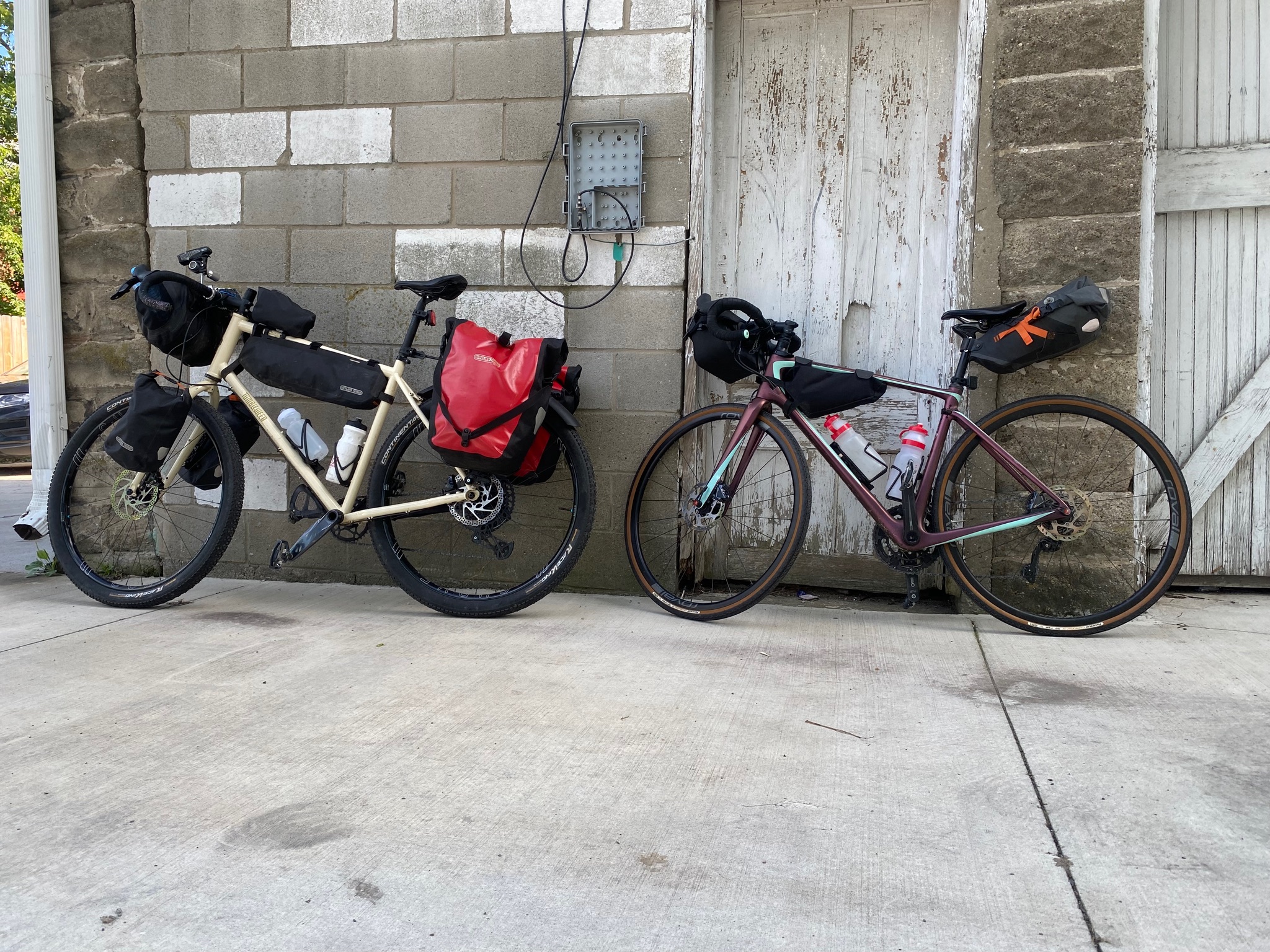
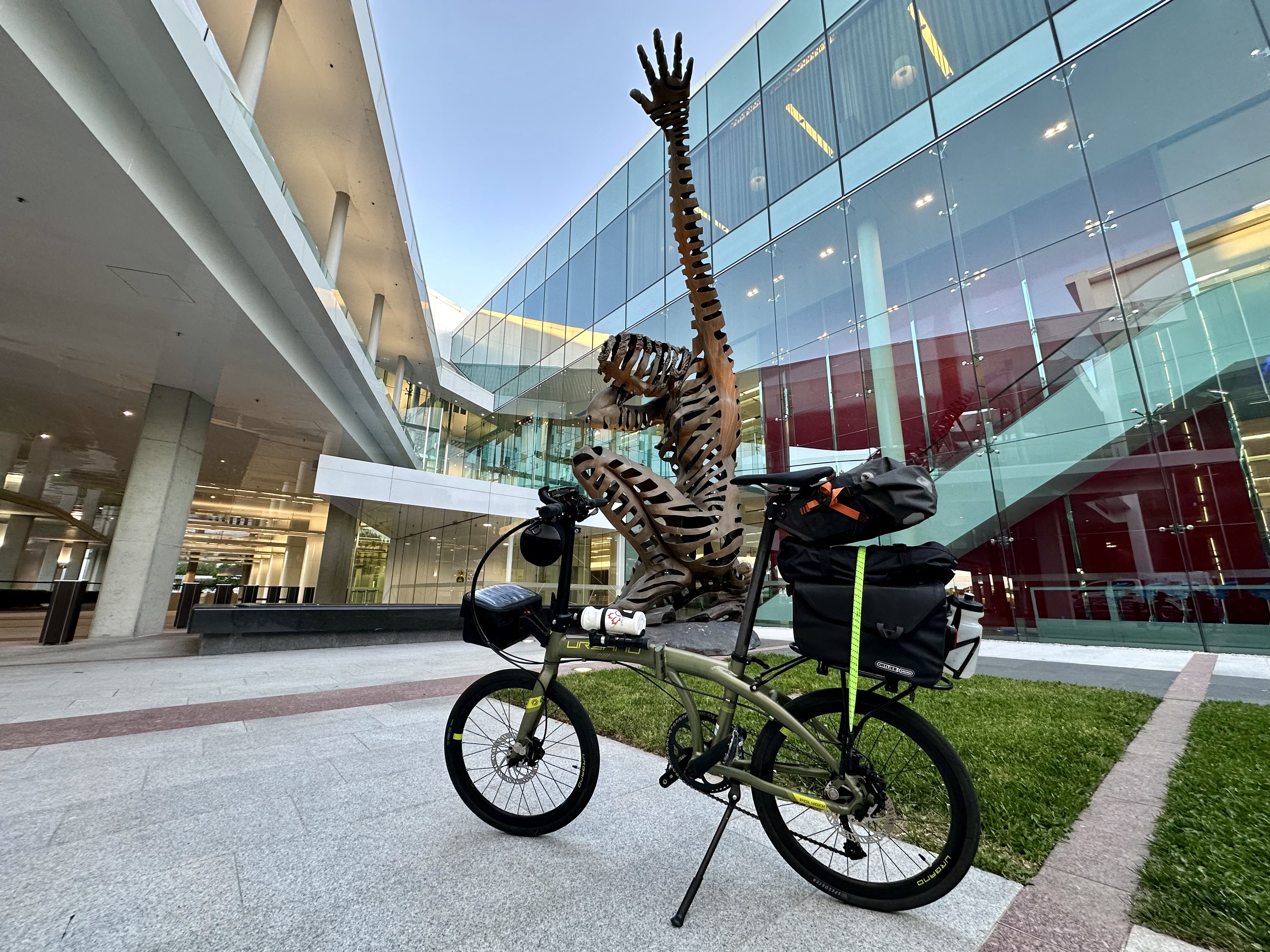
My single greatest recommendation? Start small and build from there. Here is roughly the order I’d suggest:
- Do some research as to what style of bike setup will work best for you, and consider the kit that you want to take. Bikepacking allows you to ride free – fire trail, single track, hike-a-bike are all much more possible with a lighter setup. I have found bikepacking.com to be really helpful and is now my most commonly used resource. I like it so much I’m a collective member now. I also got the knowledge and inspiration to go by watching youtube videos from different vloggers to get ideas and inspiration (I think that good places to start are Ryan van Duzer and Mat Ryder).
- Not every bike setup is good for every type of bike – partly because of geometry, partly because of type of riding you might do. I do need different bags for my XC MTB vs my gravel bike – see below.
- Invest in a couple of really good pairs of bibs – a great chamois and bib fit that is right for you makes a massive difference. Having tried many, I personally find Black Sheep and Le Col to be most comfortable, but not necessarily longest lasting. Having said that my best tip is to rotate two different brands of bibs on a trip – I’ve found just having slightly different pads and fit each day has greatly reduced any rubs and sores. Also get some light long-sleeved jerseys for sun protection: if you want something other than plain colours Stolen Goat is worth checking out.
- Do some 2 and 3 day rides first and figure out what works and what doesn’t. Based upon my early rides I’ve made some kit changes and added some accessories (eg water filter, battery pack, handlebar bag, plastic mud guard, additional wet weather clothing) that led to a setup I’m pretty happy with. But, everyone is different, and I continue to tinker with the setup!
- Plan your route and download it so that it works without mobile reception. I prefer Komoot for a whole range of reasons, but also find Strava routes very useful – it shows where people are and are not cycling. And then be prepared to change it when you want – PocketEarth is my go-to help with that as it works when there is no mobile reception. As a result I like using a quadlocked iPhone – also readily available for photo taking!
- Want some more inspiration? I’m a massive fan of the Adventure Cycling Association. Yes, it is US-based but their tremendous magazine makes a membership worthwhile, and their stories on travel and gear should give anyone confidence to have a go at a cycling trip. Cyclist Australia is also a really decent source of local ideas – well worth a subscription.
Having covered all of that, below is some more detail on bike setups that I use, and what I like about each of them. A few things:
- I can’t stress enough how important it is to get your gearing right when cycling anything involving hills and a packed bike.
- Yes, I do use a lot of Ortlieb. It is just so good – waterproof and long-lasting. The only time I had an issue with a piece (after a few years) it was replaced under warranty no questions asked. Never underestimate the value of being truly waterproof.
- I also have a few Restrap bags – these also have been good.
- I recently acquired an awesome Tailfin bar bag. Expensive, but transformative for ease of packing and carrying a decent load on the handlebars which is pretty important when multi-day bikepacking with camping equipment.
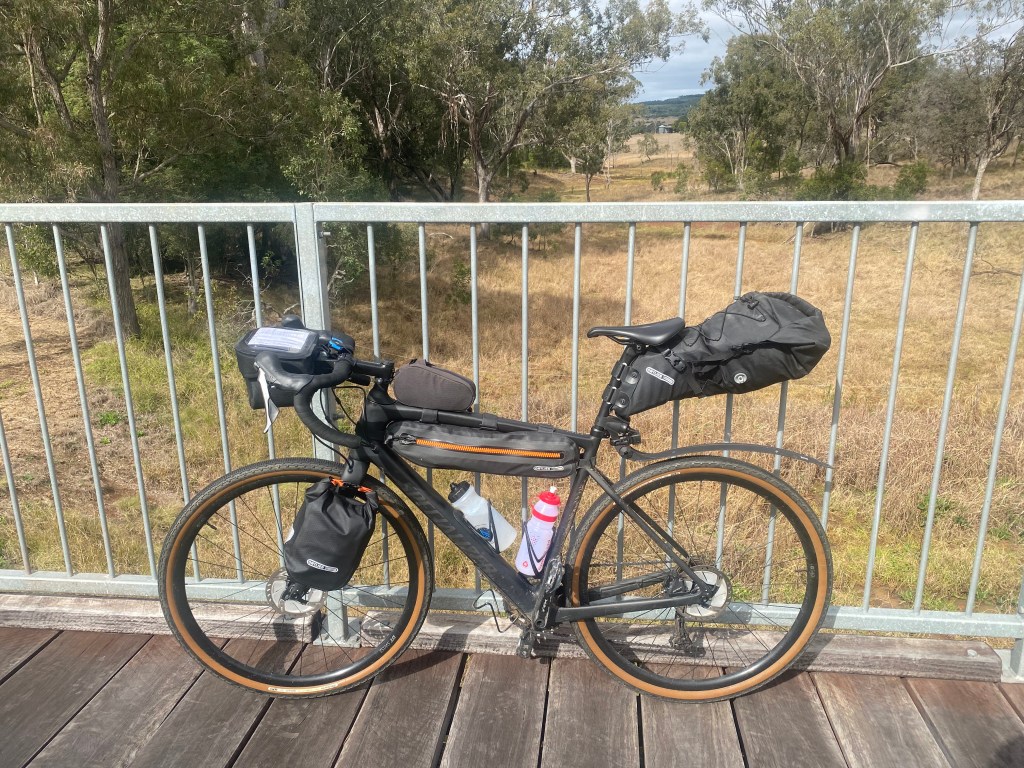
Specialized Diverge
This is my first gravel bike, and also my first bikepacking bike. I’ve now cycled over 35,000km on it, and it remains my favourite for comfort, speed and practicality when on tarmac and well maintained gravel. The only real change I’ve made is some better low-range gearing: Shimano GRX800 works great, but the off-the-shelf cassette didn’t have the ‘granny gears’ I wanted. I’ve created a mullet setup using an 11-42 cassette with a Wolftooth Goatlink, but new GRX groupsets today come with the unstoppable option which is what I would recommend for serious bikepacking.

Tumbleweed Stargazer
I did a lot of trips on my Diverge and Epic Evo (below), and decided an Adventure bike might be the sweet spot for a lot of my bikepacking. I built a custom-spec Tumbleweed Stargazer from the frame, with dyno-ready Curve wheels and a SRAM Eagle AXS 10-52 with 36t chainring Adventure setup for maximum granny gearing up steep and loose hills with a packed bike. It is just a lovely bike to cruise on – not as fast as the Diverge, but much more comfortable yet just as sure-footed as the Epic Evo when the going gets rough. I can also recommend Continental RaceKing tyres – they have the right balance of off-road capability with low rolling resistance.

Specialized Epic Evo
I learnt the massive advantages of 2.2″ plus tyres and super low gearing for routes that are more fire trail or single track using my mountain bike. A bike like this can be uncomfortable over a long distance because of flat bars: I fixed the challenge of limited hand positions with SQlab inner bar ends and Ergon GA3 grips. Luggage is also challenge, which became much simpler by using Tailfin fork mounts – these are fantastic. This remains my go to bike for adventures including a large portion of bush tracks and single track.

Polygon Urbano
My folding bike adventure is explained in a lot more detail here. The Polygon Urbano is a fantastic little bike for the money, and it is opening up new adventures – although I wouldn’t plan on much gravel on it. Having said that, it does reinforce that you can bike tour without having to spend a lot of money.
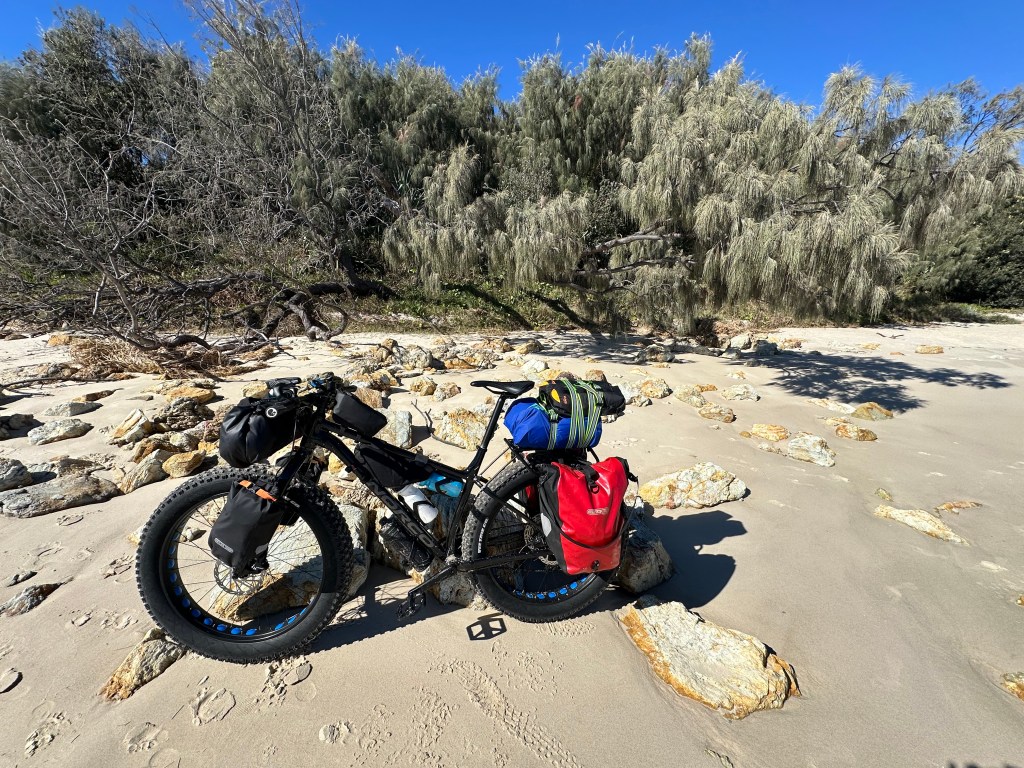
Norco Bigfoot
There are some unique and out of the way places that are great to explore, but absent a 4WD vehicle there are few ways to do so. A fat bike certainly isn’t going to get you somewhere fast, but it opens a whole lot of options. I chose the Norco Bigfoot because it was good value and had all the bikepacking mounts I could want. Even fully laden with camping equipment, days of food, clothes and other necessities, unless the sand is both loose and steep you can cycle anywhere – beach or track. And beach camping is pretty awesome.
Canberra bike shop
Folk do ask me to recommend a bike shop in Canberra. All I can say is that the bike shop I choose to use is ACT Bike Superstore in Mitchell. Darren stocks my favourite main-stream bike brand (Specialized), and he has sold Mrs Gravel and I four bikes, built another, dealt with warranty issues on one he didn’t even sell me, serviced all, and generally been super helpful.


 CyclingGravel